Half of this therapist's Asperger's clients also struggle with Internet Addiction — because the computer offers what real life often can't: connection without anxiety, creation, and a world you can control.
Recently I was asked if Asperger's and Internet Addiction were correlated, and if so, what the reasons were. This is an interesting question, as my two main specialties are Asperger's and Internet Addiction. As most of my clients have Asperger's or Internet Addiction, I feel I can answer this for at least my population. The answer is a resounding yes that at least half of my clients with Asperger's also have Internet Addiction. The main question is why?
My first career was as a Web Designer/Network Administrator, and I spent most of my time working with computers. I have been working with computers for over 25 years. I have built database systems and worked for colleges, financial institutions, and other organizations. For me, computers are as natural as breathing. I can build, program, and make them do as I please. I find it easier to communicate with them, and I often use them in my leisure activities. For me, computers are as connected to me as an extension of my own body. I have also been addicted to computer games and know how powerful addiction to technology can be. My experiences are common to many with Asperger's, from the clients I have treated.
It's All About Connections
For most with Asperger's, communicating with others is difficult. Many have difficulty anticipating others' responses and reading emotions. Face-to-face communication can be a problem if you cannot read what someone is feeling or cannot anticipate what they will say. Awkward pauses and stuttering are common. As anxiety builds, communication suffers. People with Asperger's DO want to communicate. They want to be a part of the world but do not want to feel social anxiety. If only they had a tool to communicate, but not face-to-face, and had time to think of responses. Well, they do, and it's the computer. Most Asperger's have a much greater online social presence than in real life and find more value and meaning in it.
Most people with Asperger's want to connect with others, and computers are the tool. However, many will spend so much time on the computer that they will lose the ability to communicate in person and suffer more anxiety. Social skills need to be practiced.
The Act of Creation
Most with Asperger's are intelligent and creative. Like anyone, they want to express themselves. The act of creating something is powerful and rewarding. Most look to computers as their medium of creation. I understand this feeling, as I felt intense pride and accomplishment as I completed a project. I made something from nothing, something others will use. My creation will benefit others. Therefore, I have meaning. I admit I miss this feeling, as I am no longer a web designer or working in Information Technology. Sometimes, looking at a screen of code can be soothing, knowing I can manipulate it to my will. This is the same feeling that people with Asperger's have when working on computers.
This feeling can be addictive. I remember times when I spent 20+ hours in a row on a project, feeling I had to complete it before all else. This addiction can become devastating if unchecked. This was common for my friend with Asperger's, who often spent 15-20 hours working and forgot to eat. I have done this as well.
In Their Own World
On the Internet, you can be who you want to be. If you are a loner with few friends in the real world, you can make many friends online and feel you are no longer a loner. If you feel you accomplish little in real life, you can play an online game, become a master at it, and convince yourself you have meaning. If you feel you have little control over your life, you can design websites and computer programs and control what you want. Online, you can be anyone you want, and this is addictive. Online accomplishments should not be ignored. However, they can overshadow real-life accomplishments if not careful.
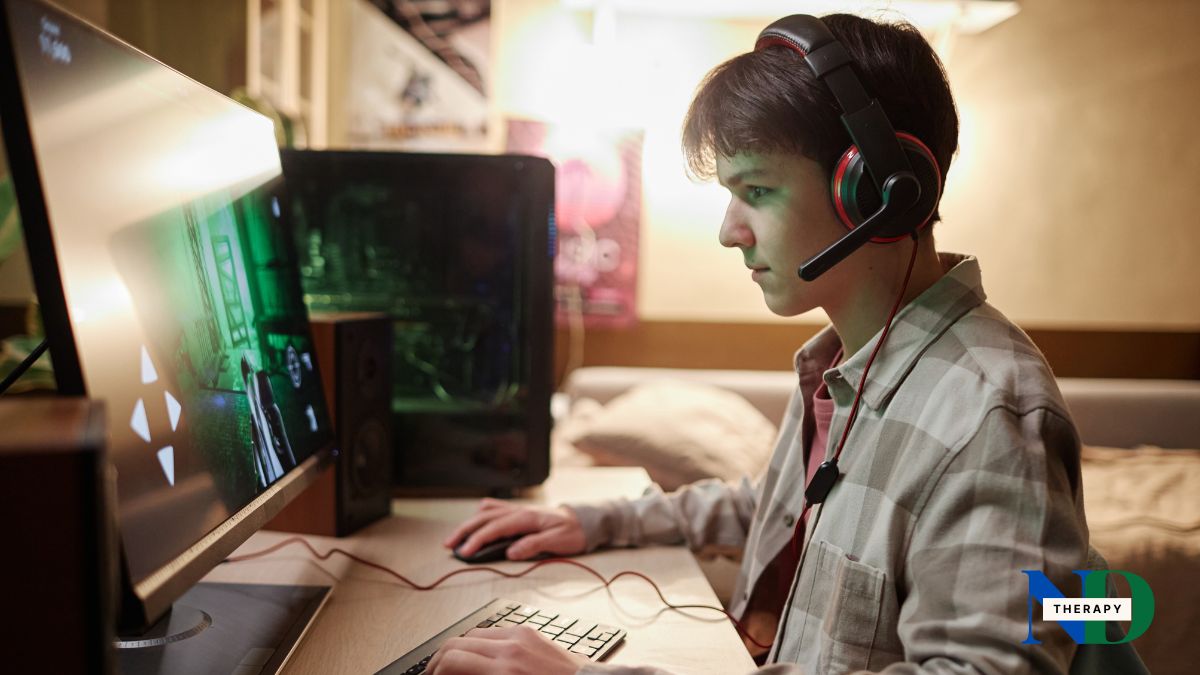
Most Asperger's clients I have treated spend 10+ hours daily on the computer, sometimes 15-20. I have seen withdrawal symptoms if not connected to the Internet. There is nothing wrong with being on the Internet, but if it is your entire life, it is a problem.
That's the line that matters — not whether you're online a lot, but whether it has quietly become everything. If you're not sure which side of it you're on, my free Internet Addiction Self-Assessment measures your use against the clinical markers of compulsion. For anyone with Asperger's who has wondered whether the computer has shifted from a tool into a refuge you can't leave, it's a clear, private place to find out.
How Do We Solve This?
Computers and the Internet are not the problems; they are the feelings within—the social anxiety, obsessions, and addictions that need fixing. One cannot avoid the Internet, as most jobs and schools require it. However, understanding the motivations behind Internet abuse is important. If you understand what is gained from the Internet, you can find alternatives. I work with my clients to find alternatives and to work with Asperger's symptoms, both positive and negative. Working on these at the same time leads to better success. By understanding why Asperger's and Internet Addiction are related, better treatment outcomes are likely.

- Why Kids Can’t Stop Playing Roblox — and What Parents Can Do About It - September 16, 2026
- What the Texas App Store Law Changes for Parents - September 2, 2026
- Thirty Days Will Not Cure You - August 26, 2026
Could I, or My Child, Be Autistic?
Take my free Autism Traits Reflection Tool to see if a formal Autism diagnosis is recommended. About twenty questions, fifteen minutes, with your results on screen right away. There are two versions — choose the one that fits: an adult reflecting on themselves, or a parent or caregiver reflecting on a teen or young adult.
No spam. Your email is only used to send your results guide and the short follow-up sequence, and you can unsubscribe anytime. This is a reflection tool, not a diagnosis.