
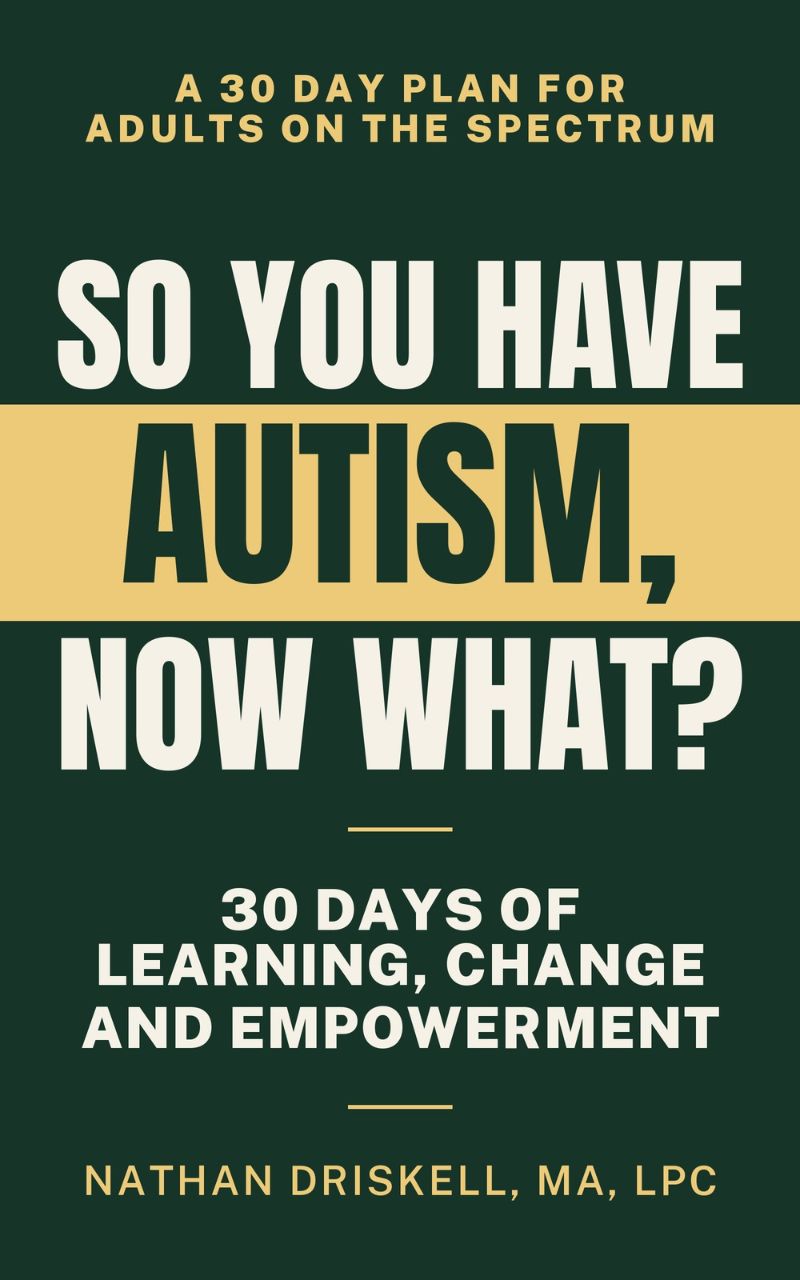
You Have Been Diagnosed With Autism. Here Is What to Do With It.
FULLY REVISED EDITION · 2026
Maybe the diagnosis came after years of being told it was anxiety, ADHD, or depression. Maybe you asked for the evaluation yourself, after a child or a coworker was diagnosed and the description sounded uncomfortably familiar. Either way, you know what it is called now. Nobody told you what to do with it.
This book does. It is a 30-day, do-the-work plan for older teens and adults at the higher end of the spectrum, written by a counselor who is autistic himself. Thirty days will not change your diagnosis, and that is not the goal. What they can give you is a clear picture of who you are, tools for the hard parts, and a plan for the year ahead.
★ 4.4 out of 5 · 70 reader reviews · 216 pages · Paperback & Kindle
About The Book
Getting diagnosed was probably a long, complicated process. You may have spent most of your life knowing you were different without knowing why, and now that you have an answer, it has raised more questions than it settled. What does this mean for my job? My relationships? Should I tell anyone? Is there anything I can actually do?
This book is for people at the higher end of the spectrum: Level 1 autism, what used to be called Asperger's, and what many people still call high-functioning autism. If you can read it on your own, live with some degree of independence, and want a better life with the diagnosis you have, it was written for you.
I know this from both sides. As a child, the professionals who evaluated me told my mother there was no hope for me. I did not learn I was autistic until years into my career as a counselor. I have now spent more than sixteen years in practice, specializing in autism, and everything this book asks of you, I have done myself or watched my clients do.
Three short chapters come first: what autism actually is, why so many adults are only finding out now, and what your diagnosis does and does not mean. Then the thirty days begin. Knowledge Is Power is about you: your traits, strengths and weaknesses, your purpose, and a realistic goal. Working With Your Autism covers coping skills, your senses, masking, special interests, rigidity, relationships, and communication, and ends with your first trip out. Building Your Life covers routines, food, addictions, and the negative thoughts that hold you back, and ends with your future.
Then the book keeps going. After Day 30, The Next 90 Days covers what sliding backward actually looks like, how to tell burnout from avoidance, and when to bring in a professional.
What's New in the Revised Edition
The understanding of autism has changed a great deal since this book first came out. The book has changed with it.
Three New Opening Chapters
Before Day 1: what your diagnosis means in plain language, what "Level 1" on your report actually describes, why so many adults (especially women) were missed for decades, and how to read your evaluation report.
Masking and Autistic Burnout
What camouflaging costs you, how to recognize autistic burnout before it flattens you, and how to tell burnout from depression.
Your Sensory Profile
A map of what overloads each of your senses, then a clear way to decide which triggers to work around and which to slowly build tolerance to, one small step at a time.
Telling People and Asking for What You Need
Whether to tell your family, partner, friends, or boss, how to say it in a few sentences, and what you can ask for at work and at school if you want help.
Three Trips Out
The program takes you out of the house three times, each about ten minutes longer than the last. If staying longer is too much, the book gives you other ways to make each trip a step harder.
The Next 90 Days
An entirely new closing section for the months after Day 30: what backsliding looks like, when to push and when to rest, and when to bring in a professional.
What Thirty Days Can and Cannot Do
Thirty days will not cure your autism. Nothing will, and that is not the goal.
Autism is not an illness you are getting over. It is not who you are, and it is nothing to be ashamed of. It is part of how your brain works, and the struggles that come with it can be improved.
Here is what thirty days can do. By Day 30, you will have an honest list of your traits, strengths, and weaknesses, written in your own words. You will have a goal for the next year, broken into steps small enough to do. You will have two coping skills you can use anywhere without anyone noticing. You will know what overloads your senses, which of those to work around and which to work on. And you will have practiced conversation, gone out and done things you may have been avoiding, and built a daily routine around sleep, hygiene, and your goal.
It asks an honest amount of you. Most days take fifteen to thirty minutes, and every activity tells you what it costs before you start. The heavier days are announced the day before. Three Hold days ask nothing new. By Day 30 you are carrying about twenty minutes a day of new routine, and Day 29 adds it up and cuts anything that is too much.
That is not a finish line. It is a floor to stand on.
Thirty Days To Put It to Work. Ninety to Make It Last.
Book Preview
FROM THE INTRODUCTION
When I was in kindergarten, the professionals who evaluated me sat my mother down and told her I would not amount to anything. Their advice was simple. “Take him home and love him, as there is no hope for him.”
My mother did not take their advice. She found a special school for children with learning and behavioral problems and enrolled me there. That is where I learned to solve problems, communicate, and get along with other people well enough to function. Nobody at that school had a name for what I had. Today, that same school specializes in teaching children with autism.
I am telling you this first because someone has probably said a version of it to you. Maybe not in those words. Maybe a doctor gave you the diagnosis in ten rushed minutes, said things would work out, and started looking for a referral. Maybe it was a family member who asked what you will never be able to do now. Maybe it was your own voice on the drive home.
…
So, You Have Autism
You likely feel confused, and maybe a little lost. Getting diagnosed was probably a long, complicated process. You may have been told you had ADHD, anxiety, or depression years before anyone said the word autism. You may have spent most of your life knowing you were different, but not knowing why. The world may have felt like a loud, exhausting place where everyone else was handed a rulebook you never received.
Now you have an answer, and it raised more questions than it answered. What does this mean for my job? My relationships? Should I tell anyone? Is there anything I can actually do? You may have gone looking for help and found therapists who do not understand autism, or a waiting list that runs for months.
Some of you are seventeen and just finished an evaluation your parents scheduled. Some of you are forty-five and asked for one yourself, after a child or a coworker was diagnosed and the description sounded uncomfortably familiar. If you are anywhere in that range, this book was written for you.
Excerpt from the Introduction, Revised Edition. Read the full opening free with Amazon's Look Inside.
What You Will Learn
What Your Diagnosis Means
Autism in plain language, what Level 1 on your report describes, and why the names keep changing.
Why You Are Finding Out Now
Why so many adults are diagnosed late, why women were missed for so long, and why your reaction to the news makes sense.
Who You Are, in Your Own Words
Your autistic traits, your real strengths and weaknesses, and what often comes with autism, written down so you can use them.
A Purpose and a Realistic Goal
One goal for the next year, broken into steps small enough to do, with a three-minute daily habit to move it forward.
Coping Skills You Can Use Anywhere
Two tools for overload and stress that work at your desk, in a store, or in a meeting, without anyone noticing.
Your Senses
What overloads you, which triggers to work around, and which to slowly build tolerance to.
Conversation and Reading People
How to handle conversation and eye contact, read what other people mean, and build the relationships you want.
Building Your Life
Sleep and routines, food, addictions, answering the negative thoughts that keep you stuck, and a clear picture of your life a year from now.
Testimonials
★ 4.4 out of 5 · 70 reader reviews on Amazon
Very helpful book. This is creating wonderful discussions between me and my son, and giving us great advice. I love how the author speaks about and addresses strengths as opposed to just weaknesses.
This book has helped me a lot. I highly recommend it. I love how he gives you a task to do at the end of each chapter
The same disorder Ellon Musk came out of the closet on.. This book tackles the problem with compassion and firsthand experience.! A starting place for great knowledge.
The book is easy to understand, very informative and very well organized! I recommended to family with autistic family member or professional who works with autistic children.
This book is amazing! It has many helpful tools and is easy to read and work with. I highly recommend this book for those that have Autism Spectrum Disorder or therapists that work with those on the spectrum.
About The Author

Nathan Driskell is a Licensed Professional Counselor in Texas (LPC #66397) in private practice, working with clients throughout the state by teletherapy. He has spent more than sixteen years in the field and specializes in two areas that overlap more often than people expect: high-functioning autism and internet and screen addiction.
He is also autistic. As a child, he was evaluated and his mother was told there was no hope for him; she enrolled him in a special school instead, where he learned to solve problems, communicate, and get along with other people. He did not learn he was autistic until years into his career, when he made autism a specialty and the research started to sound like his own life.
That is why this book is direct, practical, and never talks down to you. Everything it asks of you, he has done himself or watched his clients do.
Nathan sees teens and adults across Texas by teletherapy. If you are in Texas and want help, contact him here. If you are outside Texas, write anyway; he will do his best to point you toward someone in your area.
Other Books
Internet Addiction: Kicking The Habit
A 30-day plan for adults ready to take back their time from screens.
Is Your Child Addicted to Electronics?
A 30-day plan for parents of kids and teens hooked on screens.
End The Excuses! It Is Time To Commit!
You have two choices: set the diagnosis aside, or put it to work. The book costs less than one dinner out. Thirty days from now, you could have a written picture of who you are, tools for the hard days, and a plan for the year ahead.
Thirty Days To Put It To Work. Ninety to Make It Last. Start Today.