The report card says he’s doing well. The evenings say something else. Both are true — and the gap between them is the story.
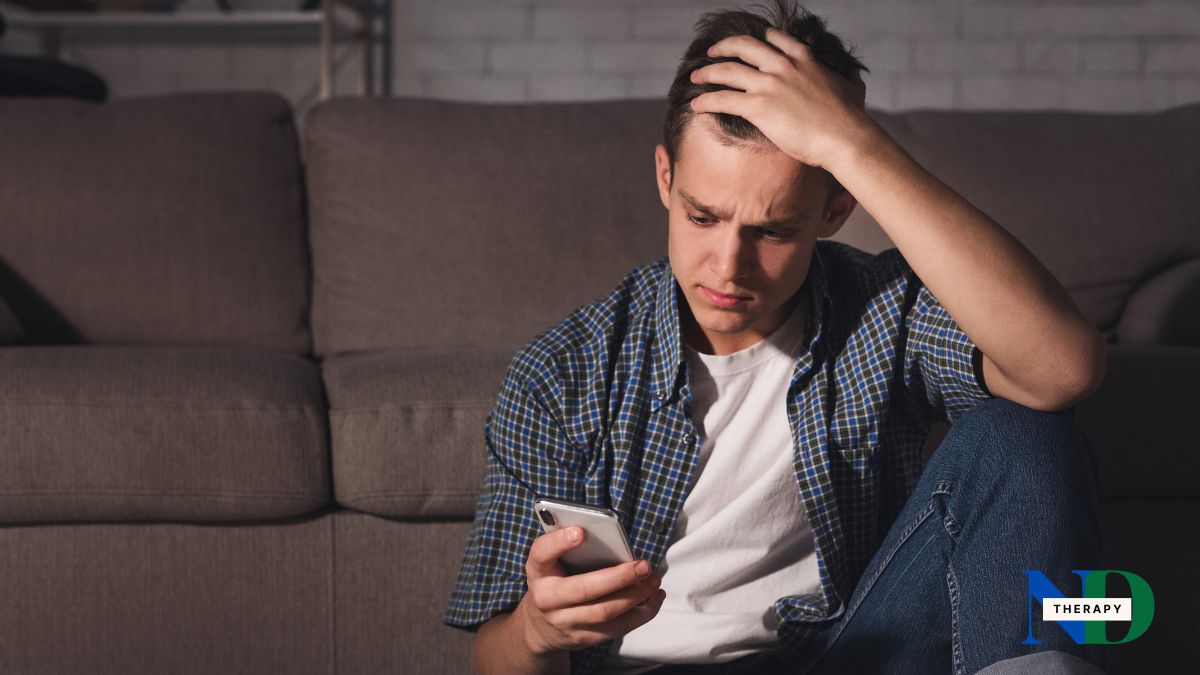
He Seems Fine at School — So Why Does He Fall Apart at Home?
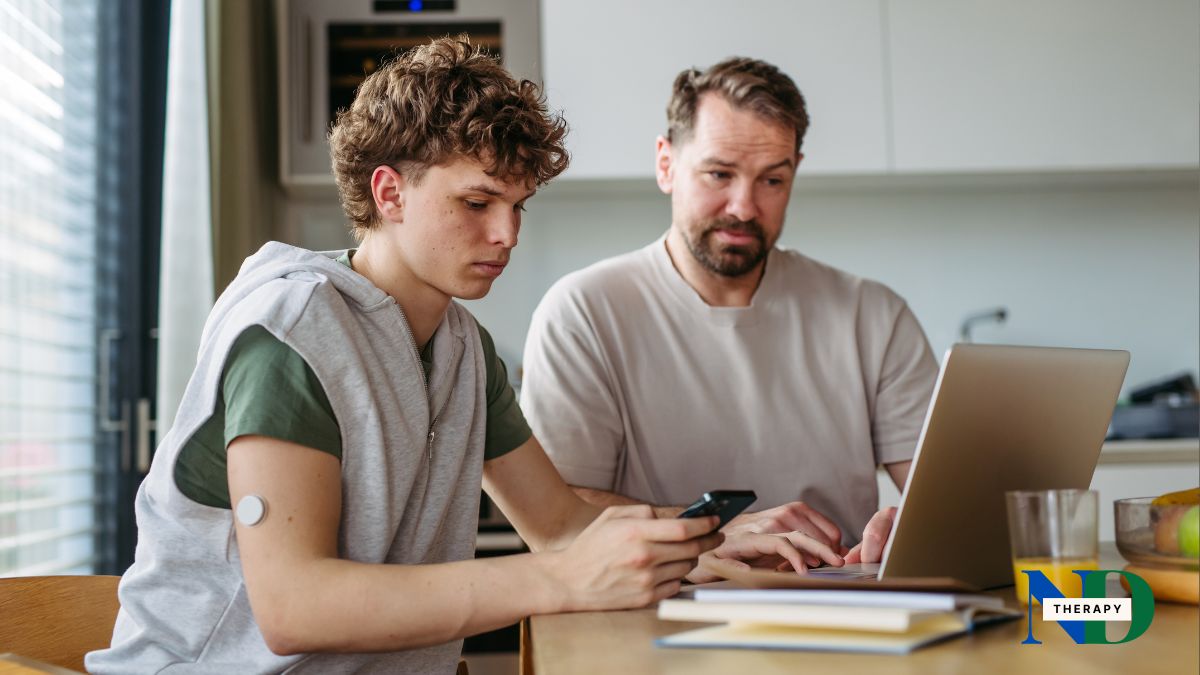
You’ve had the conversation with the teacher. He’s polite. He participates. No complaints. Maybe he even gets described as one of the easy ones. And then he walks through the front door, and within twenty minutes something small — a question about homework, a change in the dinner plan, the wrong cup — sets off a reaction that seems wildly out of proportion to what caused it.
If you have a teenager on the higher-functioning end of the spectrum, you probably know this split well. The version of your child the school sees, and the version you get at home can look like two different people. It is easy to conclude that something at home is the problem, or that he’s giving you a behavior he’d never dare give a teacher.
I want to offer a different read, and it starts with the phrase everyone keeps using about your kid: high-functioning. That word is doing a lot of quiet damage — to how the school sees him, and sometimes to how you see him too.
What “High-Functioning” Actually Measures
Here is the reframe I give parents in my practice, and I say it as someone who is on the spectrum myself: “high-functioning” does not measure how little your child is affected by being autistic. It measures how well he hides it.
The clinical word for that hiding is camouflaging, or masking — the set of strategies autistic people use to pass as neurotypical in social settings. For a teenager, masking is not one thing; it is dozens of small acts of self-monitoring running at once. Suppressing the hand movement or the bounce that would actually feel regulating. Forcing eye contact that doesn’t come naturally and holding it just long enough to look normal. Scripting the small talk in advance. Watching his own tone of voice, his own face, the volume of his own laugh, and correcting all of it in real time against what he sees everyone else doing.
Now run that for seven straight hours. Masking is effortful — the research describes it as draining and something people do most heavily in “formal” settings like school and with professionals, exactly the places your child is being observed and pronounced fine (Cage & Troxell-Whitman, 2019). The teacher isn’t wrong that he looks fine. Looking fine is the skill. It is also the work.
The Cost Comes Due After School
A performance that good has a price, and the price is paid somewhere. For most high-masking teens, it is paid the moment they get somewhere safe enough to stop — which is usually home, and usually you.
What looks like a bad attitude in the kitchen is often the sound of a nervous system finally putting the mask down after holding it up all day. He is not falling apart at home because home is where he’s comfortable acting out. He is falling apart at home because home is the one place he’s allowed to stop acting. The meltdown, the shutdown, the flat “leave me alone” and the door closing — those are the exhale.
And this matters far beyond a rough evening. In a study of more than seven hundred autistic children and teens, the more a young person camouflaged, the more anxiety and depression they carried — even after accounting for age, gender, and IQ (Ross, Grove, & McAloon, 2023). Related work on autistic students finds many feel they can’t be their true selves at school at all, and that this gap tracks with higher anxiety (Atkinson, Wright, & Wood-Downie, 2025). The daily cost you’re seeing at 4 p.m. is the visible edge of a much larger one.
Why the Screen Becomes the Battleground
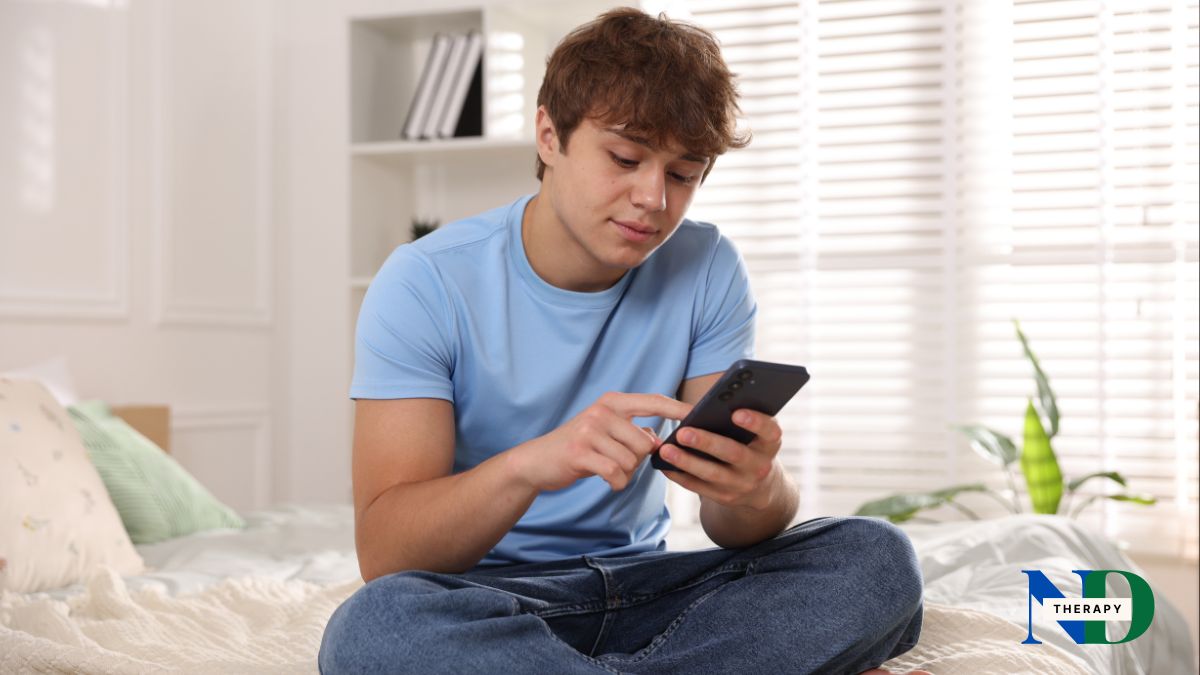
This is where my two specialties — autism and screen use — meet, and where a lot of families get stuck. For a high-masking teen, the screen is often where the mask comes all the way off.
Think about what a game or a video feed offers a kid who has spent the entire day performing: no eye contact to manage, no tone to monitor, no unpredictable humans to decode, no one grading his face. It is low-demand, predictable, and it asks nothing of the social machinery he’s been running on fumes since 7 a.m. For many of these teens, it is the single most reliably regulating part of the day.
Which is why taking it away can trigger a reaction that seems, again, way out of proportion. To you, you’re ending screen time. To him, you’re removing the only place he gets to stop performing — and you’re doing it right when he’s most depleted. That is not a spoiled kid protecting a game. That is a depleted kid protecting his one recovery spot.
None of that means the screen is harmless. It means the opposite is the real risk: when a screen becomes the only way your teen can decompress, the ordinary need to recover gets funneled into a single channel — and that narrowing is exactly how healthy use can tip toward the pattern that looks like addiction. Autistic teens are already more vulnerable to that tipping point, and the way through is rarely subtraction alone. (I’ve written about both the vulnerability and the swap-not-subtraction approach in the companion pieces linked below.)
What This Changes for You
If the split between school and home makes more sense now, a few things follow:
- Read the after-school crash as effort, not defiance. He is not saving his worst self for you. He is trusting you enough to stop performing. That reframe alone can change how the evening goes.
- Protect the decompression — and widen it. The goal isn’t to defend the screen forever or to yank it. It’s to make sure the screen isn’t the only thing on the recovery menu, so a hard day has more than one exit. That’s slow work, and it goes better when he isn’t already empty.
- Stop letting “fine at school” be the whole picture. If the people who see him six hours a day only ever see the polished version, then you are holding information they don’t have. What you see in the evening is data, not misbehavior.
The mask your teen wears all day is a genuine accomplishment. It is also expensive, and he is the one paying. The most useful thing most parents can do is stop treating the bill — the crash, the screen fight, the closed door — as the problem, and start treating it as the receipt.
If you’re not sure whether what looks “mild” in your teen is actually high-cost masking, my free Autism Traits Reflection Tool is a low-pressure place to start sorting that out. It won’t diagnose anything — it’s built to help you see the effort underneath the “fine.”
References
Atkinson, E., Wright, S., & Wood-Downie, H. (2025). “Do my friends only like the school me or the true me?”: School belonging, camouflaging, and anxiety in autistic students. Journal of Autism and Developmental Disorders. https://doi.org/10.1007/s10803-024-06668-w
Cage, E., & Troxell-Whitman, Z. (2019). Understanding the reasons, contexts and costs of camouflaging for autistic adults. Journal of Autism and Developmental Disorders, 49(5), 1899–1911. https://doi.org/10.1007/s10803-018-03878-x
Ross, A., Grove, R., & McAloon, J. (2023). The relationship between camouflaging and mental health in autistic children and adolescents. Autism Research, 16(1), 190–199. https://doi.org/10.1002/aur.2859

- Why Kids Can’t Stop Playing Roblox — and What Parents Can Do About It - September 16, 2026
- What the Texas App Store Law Changes for Parents - September 2, 2026
- Thirty Days Will Not Cure You - August 26, 2026
Could I, or My Child, Be Autistic?
Take my free Autism Traits Reflection Tool to see if a formal Autism diagnosis is recommended. About twenty questions, fifteen minutes, with your results on screen right away. There are two versions — choose the one that fits: an adult reflecting on themselves, or a parent or caregiver reflecting on a teen or young adult.
No spam. Your email is only used to send your results guide and the short follow-up sequence, and you can unsubscribe anytime. This is a reflection tool, not a diagnosis.