The courts say addiction; the science says "not yet" — but the compulsive patterns harming real people are already here, whatever label we eventually agree on.

The landmark verdict finding Meta and YouTube liable for addicting a young woman to their platforms sent shockwaves through the technology industry and gave hope to thousands of families fighting similar legal battles. But the ruling also sharpened a question that has been quietly debated in scientific circles for more than two decades: Does heavy social media use actually meet the clinical definition of addiction? A timely commentary published in Nature by Dr. Dar Meshi, an associate professor of advertising and public relations at Michigan State University, offers a measured and important answer — one that every parent, clinician, and policymaker needs to understand.
What the Jury Said vs. What Science Says
The tension at the heart of this discussion could not be more stark. On March 25, a California trial awarded $6 million to a plaintiff who argued that the addictive qualities of social media had caused her harm. Google and Meta, which were the companies found liable, disagree with the verdict and intend to appeal. And yet, despite the legal finding, despite more than two decades of study on social media use, many researchers like Dr. Meshi are wary of using the label of "addiction." That is because there is no general agreement on whether social media use can meet current standards for addictive disorders.
This is not a case of scientists being out of touch with reality. It is a reflection of the rigorous standards required before a behavior can be formally classified as an addiction — standards that protect patients from misdiagnosis while also ensuring that those who genuinely need help can access appropriate treatment.
What the Evidence Does Show
To be clear, the research is not suggesting that social media is harmless. The evidence of real-world harm is well established. Case-based evidence has linked excessive social media use to psychological distress and impaired functioning in some people — for example, through job loss, relationship problems, and academic failure. Excessive social media use has been associated with differences in the structure and activity of reward-related brain regions and with impaired decision-making — features that are also observed in substance-use disorders.
These findings are significant. Changes in reward-related brain regions are among the hallmarks of addictive behavior, and they point to a genuine neurological basis for why some people struggle to control their social media use. The problem is that correlation is not the same as causation, and the presence of similar brain changes does not automatically mean the underlying mechanism is identical to substance addiction.
Why a Formal Diagnosis Remains Out of Reach
In the United States, a behavior can only be formally designated as a clinical addiction through the American Psychiatric Association (APA) and its Diagnostic and Statistical Manual of Mental Disorders (DSM). The fifth and most recent edition of the DSM was published in 2013, before much of the evidence around problematic social media use had accumulated. In 2013, the APA considered social media addiction to be part of general internet addiction, which did not meet diagnostic criteria. No new diagnostic guidance was provided in the 2022 update to DSM-5.
This creates a significant gap between what courts are deciding and what medicine has formally established. Without official recognition from the American Psychiatric Association, the "addiction" label remains a legal and rhetorical tool rather than a medical diagnosis.
The stakes of getting this wrong in either direction are real. Wrong use of the term addiction could lead to everyday behaviors being pathologized. Medicalizing an intense behavior because of poor methods and measures — in effect, lowering the threshold for what counts as addiction — could waste medical resources and strain health care systems. People who are wrongly diagnosed could experience stigma and be prescribed unnecessary medication. On the other hand, formally designating social media use as an addiction would provide mental health practitioners with standard diagnostic criteria, thus improving screening and the development of treatments.
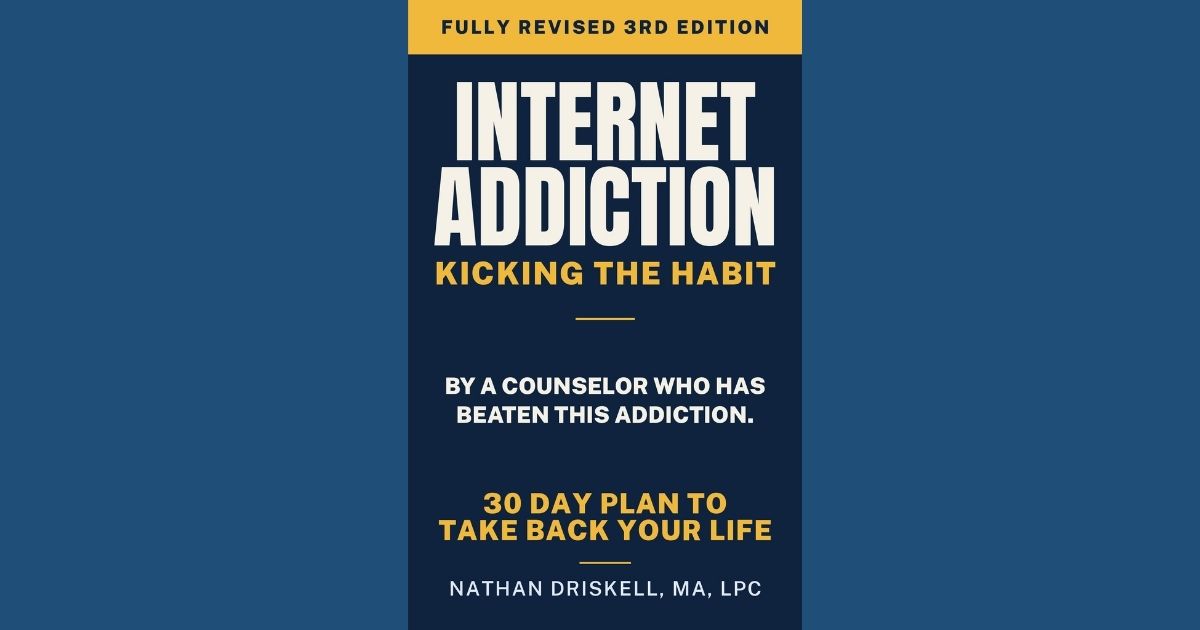
You don't have to wait for the DSM to settle this debate to look honestly at what's in front of you — whether that's your child's use or your own. Whatever it ends up being called, the behavioral markers are measurable right now: losing track of time, distress when the screen is taken away, and use that crowds out the rest of life. That's what my free Internet Addiction Self-Assessment measures — and it comes in two versions, one for parents assessing a teen or young adult and one for adults reflecting on themselves, with results on screen the moment you finish. No formal label required to justify paying attention.
What Researchers Are Calling For
Dr. Meshi's commentary is not a defense of social media companies. It is a call for science to catch up with the urgency of the moment through rigorous, independent research rather than courtroom verdicts. There is an urgent need for better information about what constitutes social media addiction. Its existence should not be debated in the courts and by jurors, but by trained experts, determined by data.
Specifically, researchers are calling for the APA to engage seriously with behavioral addiction research, for policymakers to require social media companies to provide access to anonymized user behavioral data for study, and for the development of standardized diagnostic criteria that would allow clinicians to identify and treat genuine cases of problematic social media use with consistency and accuracy.
Takeaway
This research puts the social media addiction debate in its proper perspective. The jury verdict was a historic legal milestone — and a meaningful one. But a jury determining that social media harmed one individual in one specific case is not the same as science establishing that social media addiction is a clinical disorder affecting millions. Both things can be true simultaneously: these platforms can cause real and serious harm to children, and the scientific community can still be working to formally define and measure that harm with the precision that medicine requires. For parents, educators, and mental health professionals, the practical message is clear — the behavioral signs of compulsive, distress-causing social media use are real and deserve clinical attention, regardless of what label we attach to them. Children who are struggling need help now, not after the DSM catches up.
Source: Read the Original Article

- Why Kids Can’t Stop Playing Roblox — and What Parents Can Do About It - September 16, 2026
- What the Texas App Store Law Changes for Parents - September 2, 2026
- Thirty Days Will Not Cure You - August 26, 2026
Recognize Yourself — or Your Child — In This Article?
Take my free Internet Addiction Self-Assessment to see where the patterns fall on the clinical spectrum. Twenty questions, fifteen minutes, with your results on screen right away. There are two versions — choose the one that fits: an adult assessing themselves, or a parent or caregiver assessing a teen or young adult.
No spam. Your email is only used for the follow-up sequence and my newsletter — your answers on the assessment never leave your browser. Unsubscribe anytime. This is a screening tool, not a diagnosis.