Your child's favorite games may be running on casino psychology by design — and a new lawsuit reveals how little parents were ever told about the risk.
A major new lawsuit is signaling that the legal reckoning that has already reshaped the social media industry is now moving squarely into the world of video games. Published on April 27, 2026, by the law firm Crowell & Moring LLP, this client alert analyzes a lawsuit filed by an Alabama mother against Roblox Corporation and Epic Games — the maker of Fortnite — in the U.S. District Court for the Northern District of California on April 8, 2026. The case, known as Turner et al. v. Epic Games Inc. et al., Case No. 3:26-cv-02975, alleges that both companies deliberately designed their platforms to addict children through psychological manipulation — and it is not standing alone.
What Happened to This Child
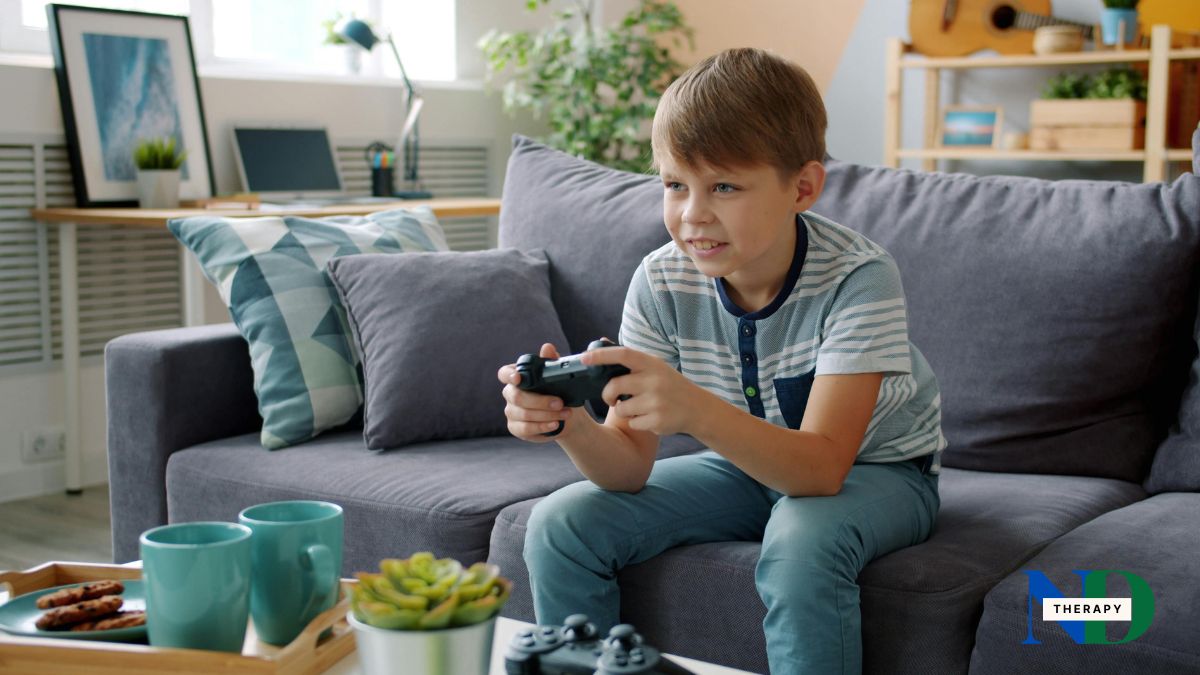
The facts alleged in the Turner complaint are specific and deeply concerning. The minor plaintiff began playing Roblox and Fortnite at just five years old. By age ten, his mother alleges he became addicted due to specific game design features deliberately built into both platforms. The lawsuit alleges the child cannot control how much he games, has lost friendships, has spent money without parental permission, has poor grades, and suffers from social isolation, depression, and anxiety.
The complaint asserts ten legal counts against the defendants, including strict product liability for design defect and failure to warn, negligent design, negligent failure to warn, intentional misrepresentation, fraud, and punitive damages. Plaintiffs also preemptively disaffirm any arbitration agreement, arguing that a minor child lacked the legal capacity to enter into a contract in the first place.
Operant Conditioning as a Weapon
The most striking allegation in the Turner complaint is that the defendants did not simply create engaging games — they weaponized a clinical psychological technique against children. The complaint alleges that the defendants enlisted licensed psychologists and psychiatrists to incorporate operant conditioning into their products, exposing minor children to the same psychological techniques used by casinos, without adequate warning and contrary to professional standards requiring informed consent.
Operant conditioning is a psychological method in which voluntary behaviors are modified through the strategic application of rewards and reinforcement to increase the frequency or duration of a behavior. In gaming, this manifests through specific mechanics outlined in the complaint: Roblox's "core loop" and Fortnite's "near miss" effect — both of which use variable-reward tactics identical to casino slot machine mechanics to continuously draw users back in and extend play sessions. The goal, the complaint alleges, is not merely entertainment — it is maximizing the number and length of play sessions to drive revenue.
Failure to Warn and Inadequate Parental Controls
The complaint also raises serious concerns about what parents were never told and what protections were never provided. Until 2024, Roblox Corp. did not offer parental controls for screen time and usage settings, despite having the technical capability to do so. Fortnite, the complaint alleges, still does not provide parental controls for screen time or gameplay, and its website contains no warning labels of any kind.
The spending limits reveal an equally troubling picture. While Fortnite restricts in-game spending for children 13 and under, the cap is set at $100 per day — meaning a child can spend $36,500 on Fortnite in a single year without requiring parental consent. For parents who believe they are monitoring their children's gaming, that number is a sobering wake-up call.
Marketing Games as "Educational" While Knowing the Risks
Perhaps the most damaging allegation involves the defendants' marketing practices. The complaint alleges that both companies knew of the risks of Internet Gaming Disorder (IGD) and its accompanying medical conditions — and yet continued to market Roblox and Fortnite as "educational," even promoting them to minors in school settings without parental knowledge or consent. Internet Gaming Disorder is alleged to cover multiple symptoms, including addiction, social isolation, depression, withdrawal symptoms often misdiagnosed as ADHD, exacerbation of ADHD, and anxiety — all of which may contribute to an increased risk of suicide. Marketing a product known to carry these risks as an educational tool represents a profound and deliberate deception.
If that list of symptoms gave you pause as a parent, you're not overreacting — those are the recognized clinical markers of compulsive use, not just signs of a kid who likes games. My free Internet Addiction Self-Assessment now includes a version built specifically for parents: 20 questions about what you actually observe in your child, scored against the same clinical markers, with your results on screen the moment you finish. It turns a vague worry into something you can name and act on. (There's also an adult version, if this article has you reflecting on your own use.)
Part of a Coordinated, Expanding Legal Campaign
The Turner case does not stand in isolation. A December 2024 suit filed in Los Angeles Superior Court by Evette Gibson — Evette Gibson v. Roblox Corp, Epic Games, case number 24STCV32897 — alleged that Epic Games and Roblox purposefully addict minors, with her now-12-year-old son addicted to both platforms and experiencing emotional difficulties, weakened social interactions, and rage.
The broader legal landscape has also shifted dramatically in favor of plaintiffs. In March 2026, juries in California and New Mexico both found against Meta, awarding $6 million in a social media addiction bellwether case and $375 million in the New Mexico attorney general's action over mental health harm to younger users. Those verdicts will embolden gaming-addiction plaintiffs and shape how future juries evaluate similar claims.
Key Legal Battlegrounds Ahead
The Crowell & Moring analysis identifies several critical legal issues that will define how this litigation unfolds. Under Section 230, the gaming industry faces a weaker defense than social media companies, because addiction-related features — variable reward loops and operant conditioning mechanics — are generated internally by developers, not by third-party content. The complaint's product-design framing is deliberately structured to foreclose this defense.
On the First Amendment, defendants will argue that game mechanics constitute protected design expression following Brown v. Entertainment Merchants Ass'n (2011). Plaintiffs counter that the challenged features are engineering choices, not creative content — analogous to a defectively designed physical product rather than protected speech.
On arbitration, defendants will seek to compel arbitration under their terms of service. The complaint preemptively disaffirms any such agreement on grounds that a minor lacked the legal capacity to contract — an argument on which courts remain divided.
Takeaway
The Turner case is a clear signal that the legal accountability now reaching the social media industry is extending to video gaming. The core allegations here — that companies hired behavioral psychologists to engineer addiction in children, concealed known risks, marketed harmful products as educational, and provided inadequate parental protections — are serious, specific, and backed by documented evidence. For parents whose children play Roblox, Fortnite, or similar games, this lawsuit raises questions that deserve honest answers: Did you know these platforms use the same psychological techniques as casinos? Did you know Fortnite allows your child to spend $36,500 a year without your consent? The children at the center of these lawsuits are not simply kids who played too many games. They are young people whose developing brains were deliberately targeted by systems designed to create compulsion. That distinction matters — in the courtroom, and in every family conversation happening around screens tonight.
Source: Read the Original Article

- Why Kids Can’t Stop Playing Roblox — and What Parents Can Do About It - September 16, 2026
- What the Texas App Store Law Changes for Parents - September 2, 2026
- Thirty Days Will Not Cure You - August 26, 2026
Recognize Yourself — or Your Child — In This Article?
Take my free Internet Addiction Self-Assessment to see where the patterns fall on the clinical spectrum. Twenty questions, fifteen minutes, with your results on screen right away. There are two versions — choose the one that fits: an adult assessing themselves, or a parent or caregiver assessing a teen or young adult.
No spam. Your email is only used for the follow-up sequence and my newsletter — your answers on the assessment never leave your browser. Unsubscribe anytime. This is a screening tool, not a diagnosis.