One of the most pressured student populations is paying a measurable price for social media — but the surprising finding isn't about screen time alone. It's about what they're actually doing on their phones.
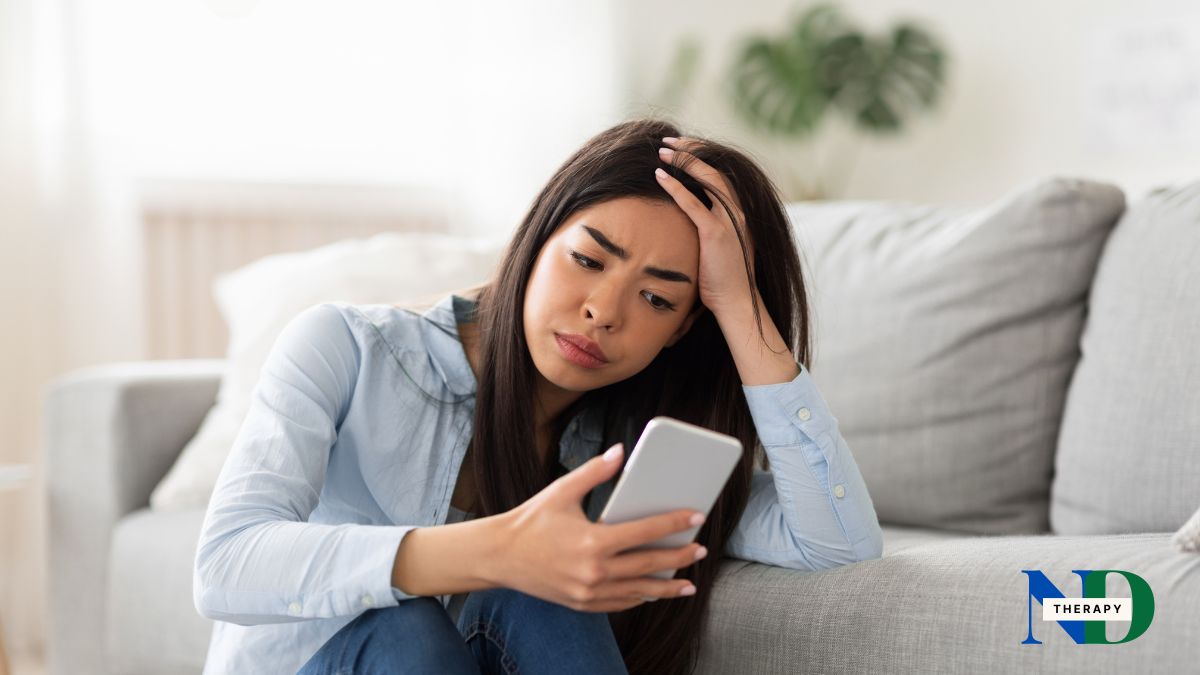
A new study published on May 10, 2026, in the Cureus Journal of Medical Science offers a sobering look at how social media use is affecting the lives of medical students — one of the most demanding student populations in any educational system. Authored by Allen J. Izraliov at Xavier University School of Medicine in Aruba, the study examines how time spent on social media platforms correlates with anxiety, well-being, academic performance, and procrastination. The findings reinforce a now-familiar pattern: it is not simply that social media is being used too much, but that how it is used determines whether it helps or harms.
What the Study Examined
Medical students live under unique pressure. Long hours, intense study demands, and the high stakes of clinical training place them in an environment where mental health is consistently at risk. The study set out to evaluate two key questions: how much time medical students spend on social media and how that time is associated with their mental health, academic performance, and tendency to procrastinate.
The researchers conducted a cross-sectional online survey from April to July 2025, using a 29-item structured questionnaire distributed to medical students at Xavier University School of Medicine in Aruba. The final sample consisted of 25 medical students recruited through voluntary online participation. Statistical analysis was performed using Fisher's exact test to evaluate associations between social media usage patterns and key outcomes, and Pearson's correlation analysis to examine relationships between daily usage hours and academic performance.
The authors are transparent about the study's limitations. The small sample size limits the extent to which the findings can be generalized, and the authors specifically note this as an important limitation worth keeping in mind.
Heavy Users Versus Light Users
The researchers classified participants into two groups based on daily usage. Heavy social media users were defined as those who spent more than 3 hours per day on social media — a category that included 16 of 25 students, or 64% of the sample. Light users spent 3 hours or less per day. This single threshold produced a series of striking comparisons across mental health and academic outcomes.
Anxiety: Heavy users reported anxiety at a rate of 66.7 percent, compared to just 22.2 percent among light users — a statistically significant difference (p=0.041). In other words, students spending more than three hours daily on social media were approximately three times more likely to report experiencing anxiety than their peers who used social media less.
Mental and Physical Health Impacts: Heavy users were significantly more likely to report perceived negative effects on their mental or physical health — 55.6 percent versus 11.1 percent among light users (p=0.040). This is a fivefold difference, and one that should be especially concerning in a medical student population.
Distraction While Studying: Heavy users reported significantly higher rates of distraction during study sessions — 66.7 percent versus 22.2 percent among light users (p=0.041). For medical students, who must master vast amounts of material under time pressure, this kind of attention fragmentation has direct consequences for learning and retention.
Missing Academic Deadlines: Heavy users were also significantly more likely to miss academic deadlines — 55.6 percent versus 11.1 percent (p=0.040). This is one of the clearest behavioral markers of how social media use translates into real-world academic disruption.
The Direct Hit to Academic Performance
Beyond the categorical comparisons, the correlation analysis revealed a clear quantitative relationship between time spent on social media and academic outcomes. Increased daily social media use was significantly negatively associated with academic scores (r = -0.47; p = 0.015) and perceived academic performance (r = -0.44; p = 0.019).
These are meaningful correlations. In statistical terms, both findings show a moderate association — meaning that as social media use increased among students in this sample, both actual academic scores and students' perceptions of their academic performance decreased measurably. Interestingly, while a positive correlation was observed between social media use and academic procrastination, it was weak (r=0.17) and did not reach statistical significance (p=0.41), suggesting that the relationship between phone use and missed deadlines may operate through mechanisms beyond simple procrastination — such as cognitive fatigue, fragmented attention, or anxiety.
That last point is the one worth sitting with. Heavy use rarely announces itself as a problem — it just quietly reshapes how you feel and function, often well before you'd call it an addiction. If you've started to wonder where your own use falls, my free Internet Addiction Self-Assessment is a structured way to find out, built around the same clinical markers I look for in practice. It now comes in two versions — one for adults reflecting on themselves, and one for parents assessing a teen or young adult — and your results appear on screen the moment you finish.
A Critical Distinction: Purpose Matters as Much as Duration
One of the most interesting findings in this study challenges the simple narrative that all social media use is harmful. Light users were significantly more likely to be using social media for academic purposes — 77.8 percent versus 22.2 percent among heavy users (p=0.017). In other words, students who used social media in moderation were also more likely to be using it productively — for educational content, peer collaboration, or accessing study resources.
This is a meaningful insight. It suggests that social media is not inherently destructive to academic life. Rather, when usage drifts into the heavy-use range, it tends to shift away from purposeful, educational engagement and toward passive consumption that displaces both study time and well-being. As the authors themselves conclude, the impact of social media depends not only on duration but also on the purpose and pattern of use.
Takeaway
For medical students, parents of older teens preparing for college, and any professional who works with high-pressure learners, this study provides clear and clinically useful guidance. The three-hour daily threshold is not magic, but it appears to be a meaningful inflection point — and the consequences of crossing it are significant: roughly three times the rate of reported anxiety, five times the rate of reported negative health impacts, and a measurable decline in academic performance. Equally important is the finding that what students do on these platforms matters as much as how long they spend on them. Social media used intentionally — for connection, collaboration, or learning — does not appear to carry the same costs as passive scrolling. The practical message for students, educators, and clinicians is straightforward: encourage mindful, structured, and purposeful use, set firm daily limits, and treat the three-hour threshold as a warning line worth paying attention to.
Source: Read the Original Article

- Why Kids Can’t Stop Playing Roblox — and What Parents Can Do About It - September 16, 2026
- What the Texas App Store Law Changes for Parents - September 2, 2026
- Thirty Days Will Not Cure You - August 26, 2026
Recognize Yourself — or Your Child — In This Article?
Take my free Internet Addiction Self-Assessment to see where the patterns fall on the clinical spectrum. Twenty questions, fifteen minutes, with your results on screen right away. There are two versions — choose the one that fits: an adult assessing themselves, or a parent or caregiver assessing a teen or young adult.
No spam. Your email is only used for the follow-up sequence and my newsletter — your answers on the assessment never leave your browser. Unsubscribe anytime. This is a screening tool, not a diagnosis.