
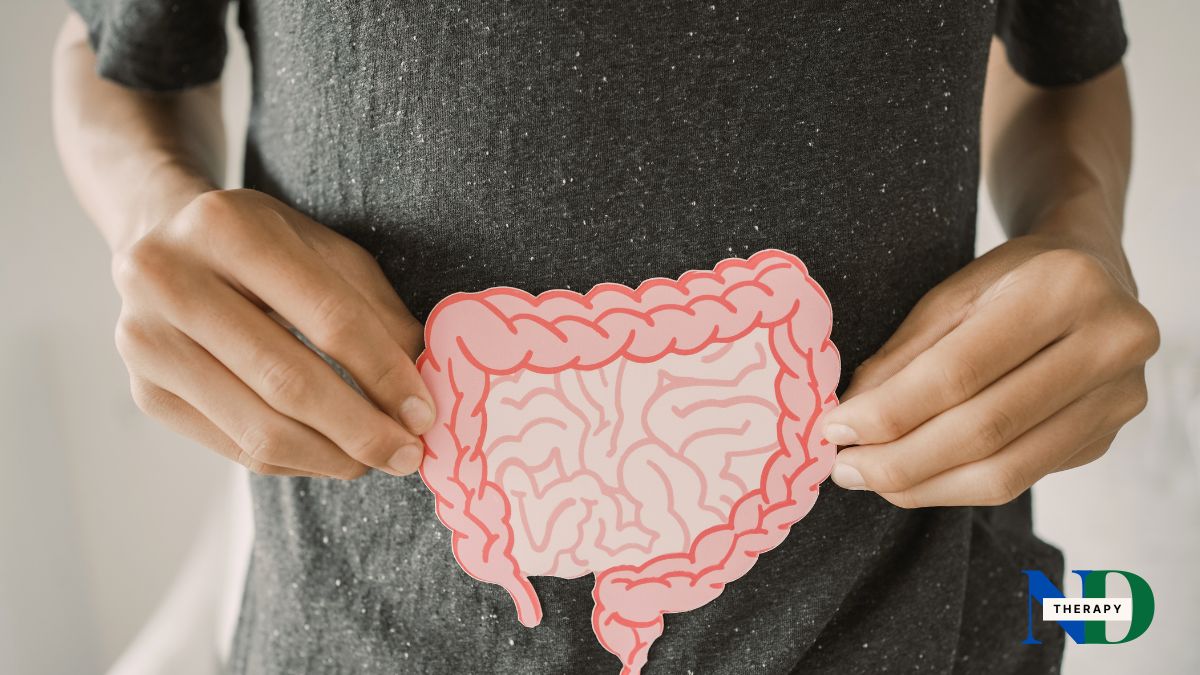
A new study published in Frontiers in Pediatrics on March 18, 2026, introduces a novel approach to treating autism that targets the gut rather than the brain. Researchers developed a new fecal microbiota transplant (FMT) method using hydrogen nanobubble water — a protocol called SHIN-1 — and tested it on children with autism spectrum disorder (ASD). The early results are striking, showing broad improvements across core autism symptoms, sensory processing difficulties, gastrointestinal issues, and anxiety — all without the use of antibiotics or invasive bowel preparation. While the study is preliminary, it opens a genuinely exciting new door in autism treatment research.
The Growing Connection Between the Gut and Autism
The idea that the gut plays a role in autism is not new, but the science behind it has grown considerably stronger in recent years. Emerging research has highlighted the gut microbiota as a potential contributor to autism, with compositional differences proposed to influence brain development and behavior via the gut-brain axis — the complex communication network linking the digestive system and the brain. In plain terms, the bacteria living in a child’s gut may be influencing how their brain functions and how their behavior develops.
Context on the scale of autism is also important here. The Centers for Disease Control and Prevention reported that 1 in 36 eight-year-olds in the United States were diagnosed with autism in 2020, compared to 1 in 68 just ten years earlier. That is a dramatic increase, underscoring the urgent need for new and effective treatment approaches. While behavioral therapies such as applied behavior analysis (ABA) remain the gold standard, no treatment currently delivers consistent, stable improvements across all patients.
How the SHIN-1 Protocol Works
What makes this study particularly noteworthy is the design of the treatment itself. Traditional FMT protocols have often required antibiotic pretreatment and a process called polyethylene glycol (PEG)-based bowel cleansing — both of which are invasive and carry their own risks for children. The SHIN-1 protocol eliminates both of these steps entirely. Instead of relying on high microbial concentrations, the protocol uses ultra-low microbial concentrations to reconstruct and stabilize the gut microbiota, and the solution is delivered rectally via a catheter or enema with minimal subject resistance.
The study enrolled 30 children with autism, with a male-to-female ratio of roughly 3:1. Researchers tracked outcomes over 30 weeks using a range of validated assessment tools to measure core autism symptoms, sensory processing, gastrointestinal function, and mental health indicators.
The Results: Broad and Significant Improvements
The outcomes reported across multiple measures are among the most compelling aspects of this study.
Core Autism Symptoms: ASD severity, as measured by the Social Responsiveness Scale (SRS-2) over 30 weeks, declined by approximately 29% across all 30 participants. Approximately two-thirds of participants moved from severe or moderate to milder categories, and 6 participants progressed entirely into the normal range. Within the social domain specifically, Social Communication and Interaction (SCI) scores dropped 28 percent, with improvements across all four subscales: social awareness, social cognition, social communication, and social motivation. The severity of restricted and repetitive behavior declined by 33 percent.
Sensory Processing: Sensory challenges are among the most disruptive aspects of daily life for many autistic children, and this treatment addressed them as well. Sensory processing disorder, present in approximately 90 percent of individuals with autism, also responded to treatment. Among 26 subjects assessed, overall sensory severity fell by 30 percent, with comparable reductions across all three sensory subtypes: hyposensitivity, hypersensitivity, hyporesponsiveness, and sensation seeking.
Anxiety and Depression: Perhaps the most dramatic finding involved mental health outcomes. Anxiety and depressive symptoms, present in 87 percent of participants, declined by 50 percent — substantially exceeding the overall autism severity improvement. This is a remarkable result, especially given that anxiety is one of the most common and debilitating comorbidities in autistic children.
An Important Distinction by GI Status: The research also revealed an interesting divergence based on whether children had co-occurring gastrointestinal disorders. Subjects without co-occurring GI disorders outperformed those with GI involvement, achieving a 45 percent SRS-2 reduction into the normal range, versus 24 percent in those with GI involvement — an unexpected divergence that warrants further investigation.
Important Limitations to Keep in Mind
This research is genuinely exciting, but it is important to interpret it with appropriate caution. The findings should be interpreted cautiously due to the lack of a randomized control group, the small sample size of 30 participants, the single-donor design, and the geographically limited cohort. The study was also supported in part by internal funding and involved an author affiliated with the developing company. These are significant limitations, and the results will need to be confirmed through larger, double-blind, placebo-controlled trials before this therapy can be considered a validated treatment option.
Takeaway
This study represents an early yet meaningful step toward understanding how the gut microbiome may influence autism symptoms. For parents of autistic children who have struggled to find consistent, effective treatment options, research like this offers real hope — even if it is not yet ready for widespread clinical use. The fact that this protocol produced improvements across core autism behaviors, sensory processing, gastrointestinal function, and anxiety all at once — and without antibiotics or invasive preparation — makes it especially worth watching. As research into the gut-brain axis continues to evolve, the relationship between gut health and autism is emerging as one of the most promising frontiers in neurodevelopmental medicine. Larger clinical trials cannot come soon enough.
Source: Read the Original Article

You can reach me at my website or call me directly at 832-559-3520 if you have any questions. Thank You!
- Big Tech Faces Children’s Addiction Claims in Court - March 23, 2026
- New Autism Treatment Targets the Gut, Not the Brain - March 18, 2026
- Autism and Comorbidities: What Every Parent Should Know - March 17, 2026